
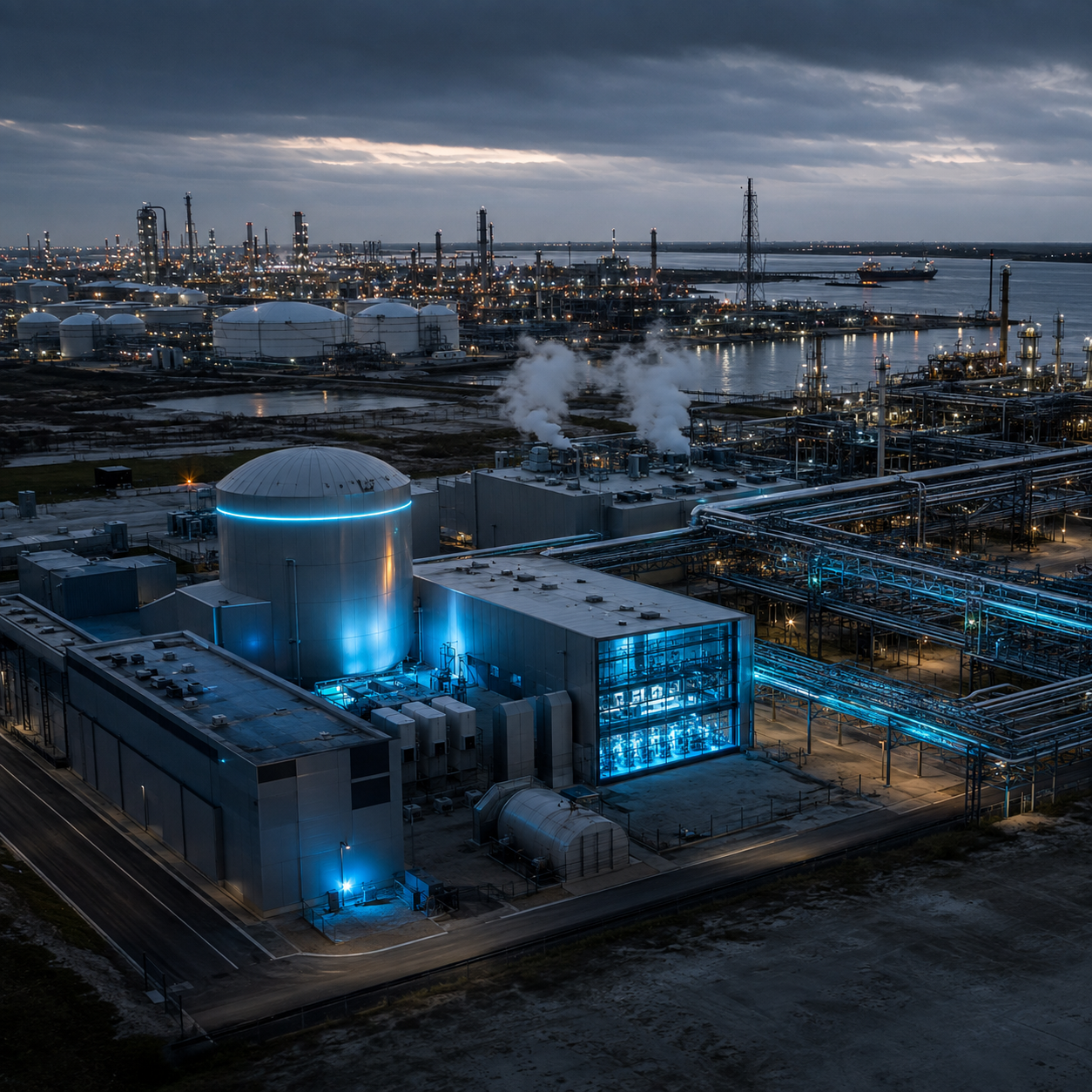
X-Energy is set to receive up to another $1 billion in U.S. public funding for its advanced nuclear project with Dow in Seadrift, Texas. If the full amount is provided, total public funding for the project since 2021 could reach $2.15 billion.
The project is designed to supply both electricity and industrial steam to Dow’s petrochemical and plastics facility, positioning advanced nuclear as a potential energy source for industrial operations rather than solely for grid power.
X-Energy and Dow’s Texas Nuclear Project An industrial application for advanced nuclear
The Seadrift project aims to replace Dow’s existing energy and steam units with advanced nuclear generation.
For large industrial facilities, that distinction matters. Electricity is only one part of the energy requirement. Process steam and continuous thermal supply can also be critical to production.
Why industrial load matters
A nuclear project tied directly to a large industrial facility creates a different commercial model from a conventional power plant. Instead of relying entirely on wholesale electricity markets, the project is designed around a large, continuous industrial energy demand.
Dow and X-Energy have submitted a construction permit application to the U.S. Nuclear Regulatory Commission. The companies are targeting operation in the early 2030s.
$2.15 Billion in Potential Public Funding
Government support is helping address first-of-a-kind project risk
With the additional funding, total potential public support for the Seadrift project would reach up to $2.15 billion since 2021.
The scale of funding highlights the financing challenge facing advanced nuclear projects. First-of-a-kind developments carry technology, construction, regulatory and execution risks that can make private capital more difficult to mobilize.
The bigger financing question
For investors and industrial energy users, the important issue is not simply the amount of public funding involved. It is whether government support can help establish a commercial model that can eventually be replicated without the same level of public backing.
Why Industrial Nuclear Could Matter
Advanced nuclear is being evaluated beyond grid electricity
The Seadrift project reflects a broader potential use case for nuclear power: supplying energy directly to large industrial loads.
Petrochemical, chemical, refining and manufacturing facilities often require reliable electricity alongside continuous process heat and steam. Advanced nuclear could potentially address both requirements within a single energy system.
A different energy infrastructure model
If the Seadrift model proves commercially viable, future nuclear projects could increasingly be evaluated around industrial demand, rather than solely around regional electricity markets.
That could influence long-term decisions around power procurement, industrial energy infrastructure and decarbonization.
What Happens Next?
Regulatory approval remains a key milestone
The project is still in development, with regulatory approval and construction ahead. Its commercial significance will ultimately depend on execution, project economics and the ability to operate the technology reliably at industrial scale.
The metric to watch
For C-suite energy and industrial leaders, the key question is straightforward:
Can advanced nuclear provide reliable electricity and industrial steam at a cost and scale that works for large manufacturing facilities?
If the answer is yes, the addressable market for advanced nuclear could extend well beyond traditional power generation.
Executive Insight
The Seadrift project is important because it tests a specific commercial proposition: whether advanced nuclear can function as industrial energy infrastructure.
The outcome could shape how energy-intensive companies think about long-term electricity supply, process heat, infrastructure investment and decarbonization strategy.