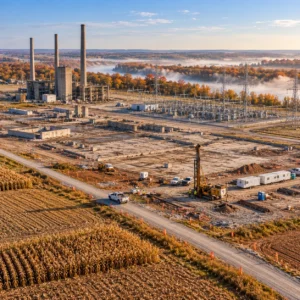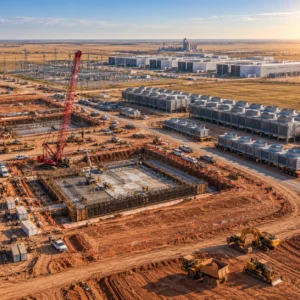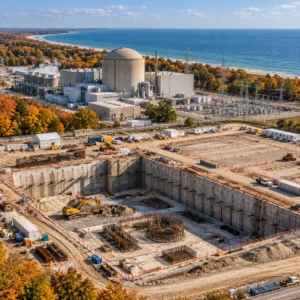
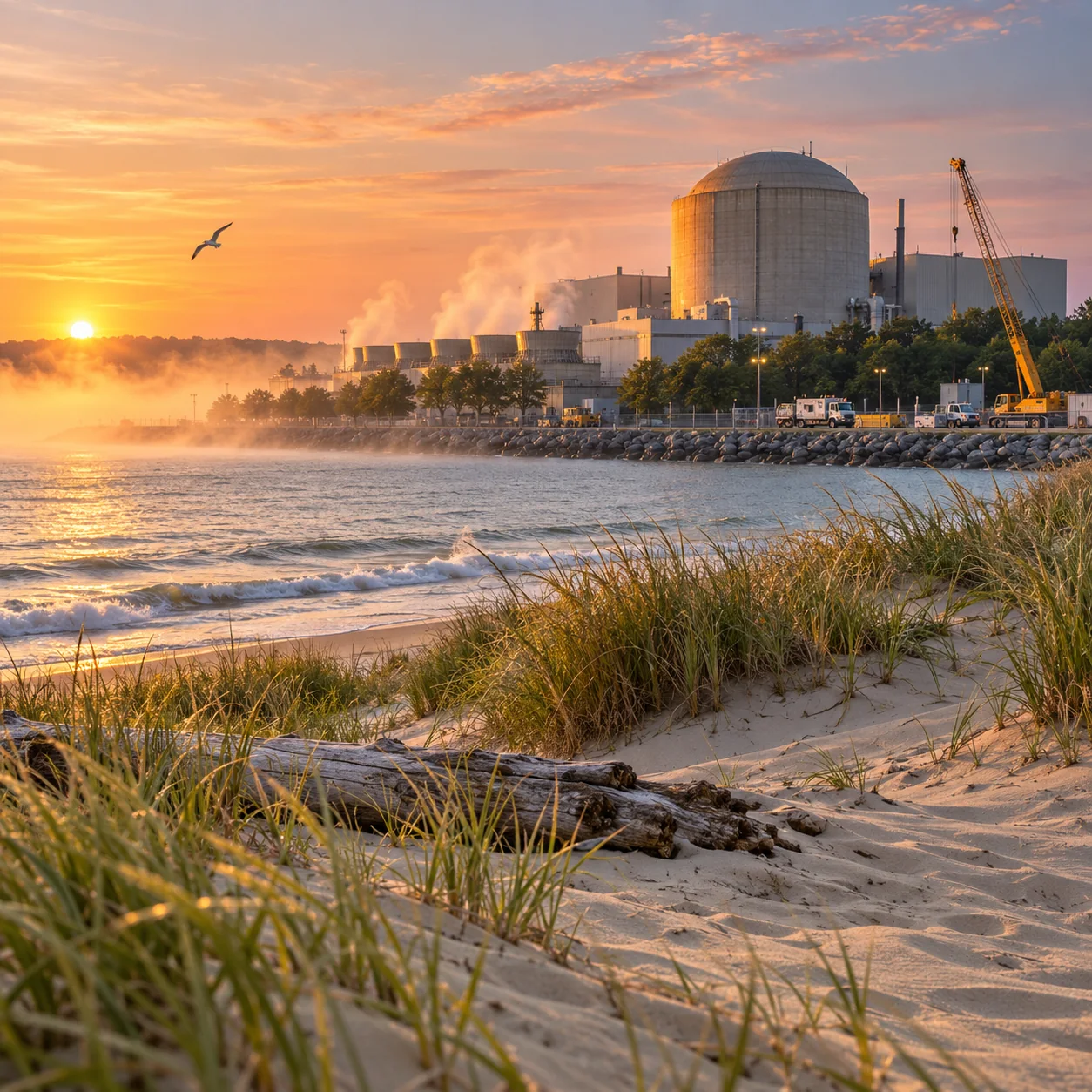
A retired American reactor is taking on fuel again.
On August 30, Holtec International began loading fuel into the reactor vessel at Palisades, the 805-megawatt plant in Covert Township, Michigan, that shut down in May 2022 after 50 years of operation. The plant entered Mode 6, the refueling stage under its Technical Specifications, and crews began placing 204 fuel assemblies into the core. The load is a mix of new fuel and partially used fuel from the plant’s final operating cycles.
Palisades could become the first U.S. nuclear plant to restart after being slated for decommissioning. With fuel going into the vessel, that outcome is no longer a theory about licensing and engineering. It is a sequence of plant operations.
That changes how the industry should value its existing capacity.
Fuel in the Vessel Ends the Debate About Feasibility
Restart projects spend a long time on paper. Regulatory filings, financing packages and inspection reports can all point in the right direction while the plant itself stays cold. Loading fuel is different. It shows that the owner, the regulator and the plant staff are confident the hardware is ready for nuclear operation.
Holtec says the milestone follows more than two years of inspection, maintenance, refurbishment, testing and equipment upgrades. According to the company, the work included:
- Reinforcement of steam generator tubes
- Removal of corrosive species from steam generation spaces
- Replacement of control rod drive mechanism nozzles
- Chemical decontamination and passivation of the primary system
- Reactor vessel inspections
- Equipment upgrades and modernization projects
“Loading fuel into the Palisades reactor is an important milestone and a reflection of the tremendous effort of the men and women who have brought this plant to this point,” said Fadi Diya, Holtec’s chief nuclear officer.
The schedule did slip. Michigan Public reports that maintenance issues, including thousands of cracked steam generator tubes, pushed back the original target of restarting by the end of 2025. Owners weighing their own restarts should note what happened next: the tube problem was treated as a repair job, not a reason to stop. A Holtec spokesperson told Michigan Public that Palisades will begin generating once its Technical Specifications are met along with all applicable federal regulations and industry standards.
Restored Capacity Is the Fastest Nuclear Megawatt Available
At full output, the plant can supply electricity to roughly 800,000 homes, according to Michigan Public. That is a large block of firm, carbon-free capacity arriving on a site that already has a grid connection, cooling water, security infrastructure and a community that lived alongside a reactor for five decades.
Compare that with a greenfield project. New build means site characterization, a construction permit, years of heavy construction and first-of-a-kind risk. A restart carries its own engineering uncertainty, but the reactor, the containment and the transmission path already exist.
For utilities facing rising load from data centers, manufacturing and electrification, that difference in timeline is the whole argument.
Holtec founder and CEO Kris Singh said in an interview earlier in the summer, cited by the American Nuclear Society, that he expected Palisades to “restart this year, ahead of its contract to supply power by March 2027.”
The Capital Stack Shows How Restarts Get Financed
Palisades did not come back on private balance sheets alone. Holtec credits funding from the State of Michigan, a U.S. Department of Energy loan and power purchase agreements with Wolverine Power Cooperative and Hoosier Energy.
That structure is worth studying. Public support absorbed much of the early risk, when the plant’s condition and the regulatory path were least certain. Long-term offtake from two cooperatives gave the project a revenue base before a single megawatt-hour was generated. Cooperatives that serve rural and industrial members want stable, long-dated supply, and a restored nuclear plant offers exactly that.
For investors, the lesson is that restart risk can be split up and assigned. Government covers the uncertainty at the start, contracted buyers cover demand, and the operator carries execution.
One Site, Two Generations of Nuclear
Palisades is also being set up as more than a single restored unit. Holtec plans to deploy the first two of its SMR-300 small modular reactors, Pioneer units 1 and 2, at the same site. World Nuclear News reports that Holtec is also seeking a 20-year license extension that would carry the existing plant to 2051.
Pairing an operating large reactor with new small modular units has practical advantages. The site’s licensing history, transmission access, trained workforce and local support can carry over to the new build. A team that has just brought a reactor back from decommissioning also has fresh, hard-won experience with NRC oversight and complex plant work.
That gives the SMR program something many first deployments lack: an operating nuclear organization already on site.
What Owners of Retired and Retiring Plants Should Watch
Not every shuttered reactor is a restart candidate. Palisades was defueled in June 2022, and its license was transferred to Holtec that month, before major dismantling could close off the option. That timing mattered.
The next steps are operational: completing the core load, meeting Technical Specification requirements, reaching criticality and ramping up power. Each step will be watched closely by utilities, regulators and investors deciding whether to preserve options at plants approaching retirement.
Is retirement really final for a reactor that is still physically intact?
And what is that optionality worth when load forecasts keep climbing?
Palisades is close to giving the industry a working answer.
The plant was retired once on paper. Now it has fuel in the core, and other owners have a model for bringing nuclear capacity back.