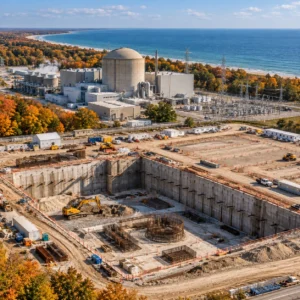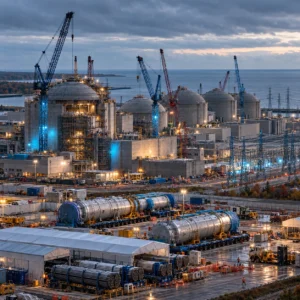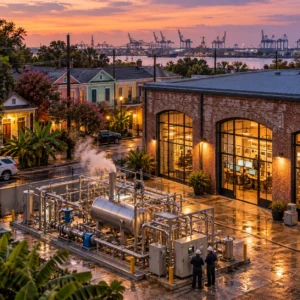
Large light water reactors are back on the federal docket.
On October 9, 2026, the Nuclear Regulatory Commission published a draft environmental impact statement for Fermi America’s plan to build four Westinghouse AP1000 units at its Project Matador Advanced Energy and Intelligence Campus in Carson County, Texas, next to the Department of Energy’s Pantex Plant near Amarillo. According to the NRC notice published that day, NRC staff’s preliminary recommendation is that the agency issue the requested combined license, contingent on successful completion of the safety review.
That is an environmental finding, not a licensing decision. But it is the first draft EIS completed under an accelerated environmental review pilot, according to the American Nuclear Society, and it lands on a project designed to send gigawatts of firm power straight to data centers. Both facts carry weight well beyond the Texas Panhandle.
An Applicant-Led Review Reaches Its First Real Test
Under the pilot, Fermi America prepared the draft EIS itself, and the NRC supervised the work and evaluated it independently. The NRC notice says staff based their recommendation on that independent review, consultations with agencies and Indian Tribes, and public scoping comments. The agency is also using the same process to satisfy its historic preservation obligations.
The efficiency numbers are what developers will study. Nuclear News Network, citing the NRC’s own estimate, puts the pilot’s cost at about 1,000 NRC staff hours and roughly $175,000 in contractor support. Environmental reviews for new reactors have historically been among the longest items on a licensing schedule, so a model that shifts drafting to the applicant while keeping the regulator in control of the conclusions could shorten the path for every project that follows.
That change matters.
If the approach holds up through public comment and a final statement, it gives utilities and developers a repeatable template rather than a one-off accommodation.
Four AP1000s Built for a Data Center Campus
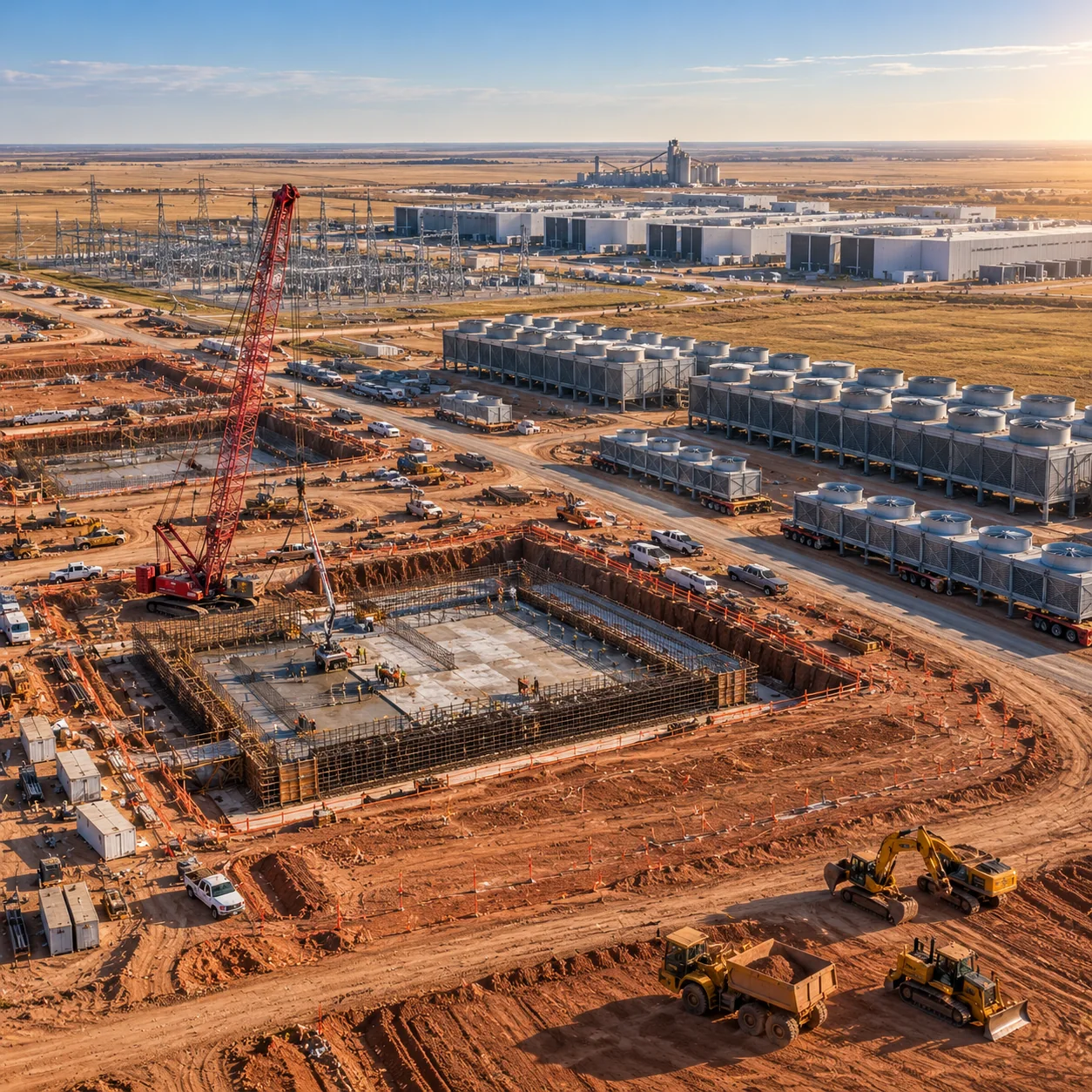
The scale of Project Matador is what separates it from most new nuclear proposals. According to Nuclear News Network’s reading of the draft EIS, each unit is rated at 3,415 MWt and at least 1,000 MWe net, with about 4 GW of output intended for data centers on the campus. The reactors would occupy 881 acres within a 5,236-acre site, with units staggered about two years apart over roughly 12 years.
Fermi has also lined up demand. The American Nuclear Society reports that in August 2026 the company signed its first binding lease with AI cloud provider TensorWave, covering a data center with 222 MW of facility power and room to grow to as much as 650 MW. The project is being developed with Texas Tech University.
For the industry, the pairing is the point. A large reactor fleet anchored by a captive load does not depend entirely on wholesale market prices to justify its cost, which is exactly the commercial structure lenders and offtakers have been asking for.
Dry Cooling Solves the Water Problem on the High Plains
The Panhandle is not an obvious place for large reactors. The nearest sufficient surface water, the Canadian River, sits about 15 miles away, according to Nuclear News Network.
Fermi’s answer is dry cooling. The draft EIS describes 160 fans per unit with no cooling water, and about 1.4 million gallons per day of process water drawn from municipal supply. If that design clears the safety review, it widens the map of where large nuclear plants can be sited, opening inland locations close to data center demand and away from crowded coastlines and rivers.
The workforce figures are just as telling. The draft EIS estimates about 2,200 construction workers per unit, with up to 8,200 on site at peak, and 600 operations staff for Unit 1 plus 230 for each additional unit. Those numbers describe a regional industrial program, not a single plant.
What Developers and Investors Should Watch
The Matador review offers several lessons for anyone planning large or advanced reactors:
- Applicant-prepared environmental reviews can move quickly when the regulator stays in charge of the findings
- Dry cooling can open water-constrained inland sites to large reactors
- Captive data center load strengthens the commercial case for multi-unit builds
- Early engineering work, such as the front-end design study Hyundai E&C completed in July 2026, reduces execution risk before construction
- Staggered unit schedules let construction crews and supply chains carry lessons from one unit to the next
Each of those points applies well beyond Texas. Utilities in the Southeast and Midwest weighing new large units face the same questions on siting, water, financing and workforce.
The Next Milestones Are Already on the Calendar
Public comments on the draft EIS are open through November 23, 2026, and the NRC is targeting a final environmental statement in December 2026, according to the American Nuclear Society. Nuclear News Network reports that Part 3 of the application, the site-specific safety analysis, is due December 31, 2026, and that the NRC has said it will complete its review within 18 months of a complete application under Executive Order 14300.
The safety review, a mandatory hearing and a Commission vote still stand between Fermi and a license. Fermi Inc.’s quarterly filing, as reported by Nuclear News Network, points to commissioning one unit per year from 2033 to 2036.
Can an applicant-led environmental review become the standard for new reactors?
Can large AP1000 fleets be built inland, without river water, beside the loads they serve?
Project Matador is now testing both questions in public, on a federal schedule.
The environmental case for four large reactors in the Panhandle is on paper. The next step is proving the safety case can move just as fast.