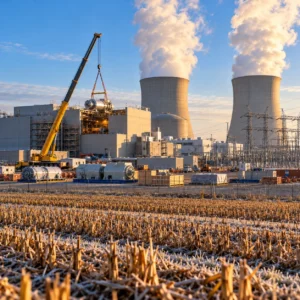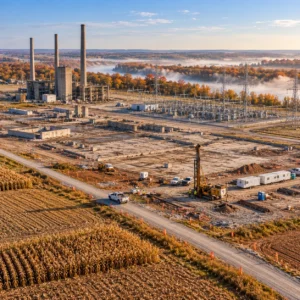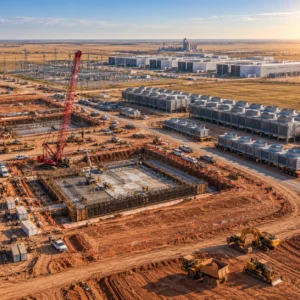
The fuel side of the nuclear revival has reached a milestone of its own.
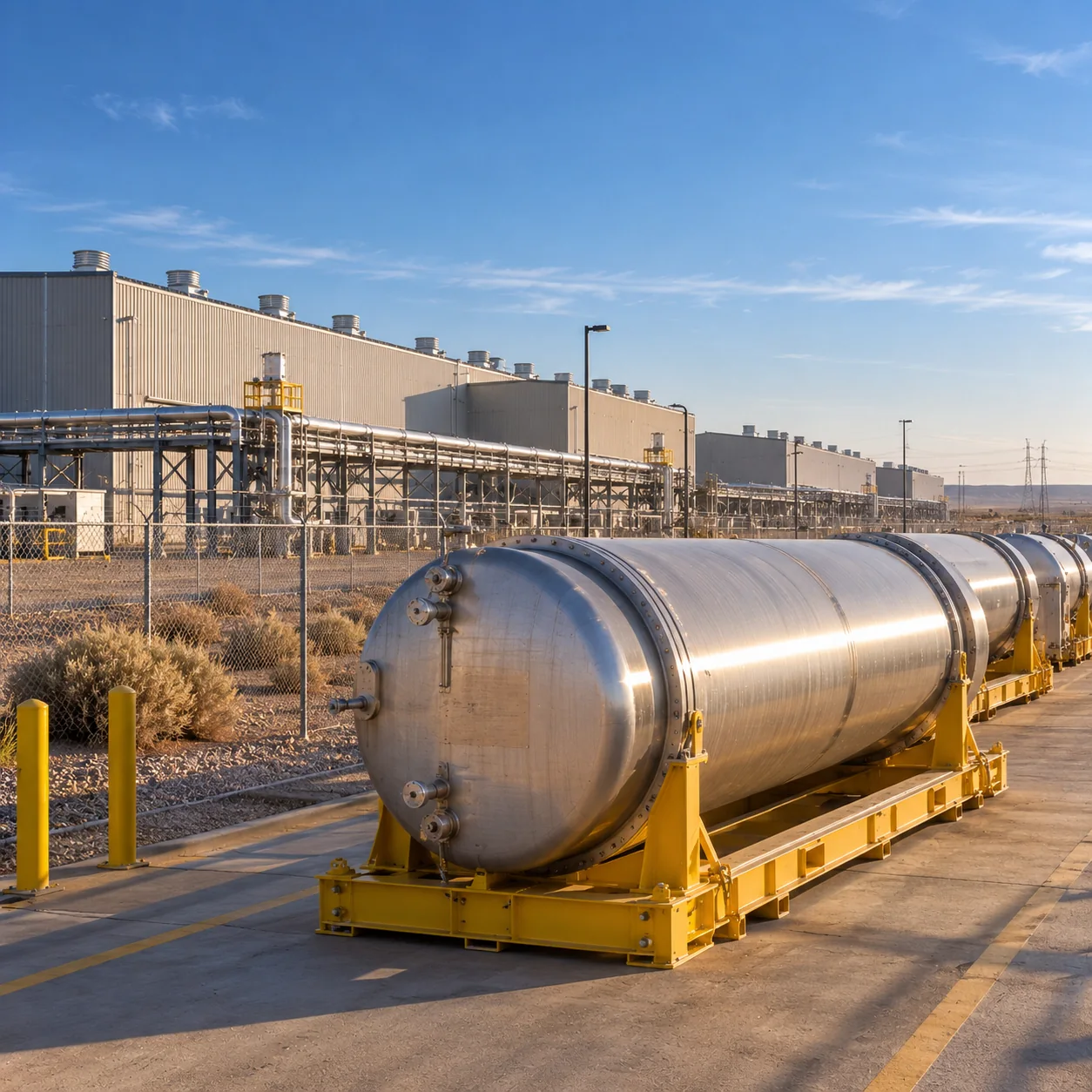
On November 2, 2026, Urenco USA announced that it had completed its first commercial product cylinder of LEU+ at the National Enrichment Facility in Eunice, New Mexico. The company describes it as the first commercial production of the material in the Western world.
LEU+ is uranium enriched to between 5% and 10% U-235, a step above the 3% to 5% that fuels most of today’s commercial reactors. That gap sounds modest. For utilities, fuel vendors and advanced reactor developers, it opens a set of options that until now depended on supply outside the United States or on material that did not yet exist at commercial scale.
A Licence Turned Into Real Product
The path to the first cylinder began in September 2025, when the US Nuclear Regulatory Commission authorised the New Mexico plant to enrich uranium up to 10% U-235. According to Urenco USA, every gas centrifuge cascade at the site is now licensed to produce LEU+.
That matters because licensing alone does not move fuel. A plant has to prepare its operations, its people and its procedures before a regulatory approval becomes a product a customer can buy.
Jody Blackshear, Managing Director of Urenco USA, put it plainly: “A tremendous amount of work has gone into preparing our plant and our staff to reach this achievement.”
The facility has a long operating record behind it. It began operations in 2010, shipped its first product in 2012 and has produced more than 50 million separative work units in total, according to the company. Its current capacity of 4.3 million SWU a year covers roughly one third of current US demand for low-enriched uranium.
Longer Fuel Cycles Are the Near-Term Prize
The first beneficiaries are likely to be the operators of the existing fleet.
Higher enrichment allows light water reactors to run longer fuel cycles. Urenco USA and World Nuclear News both point to the practical result: fewer refuelling outages and lower operations and maintenance costs. For a fleet that is already being pushed toward uprates, licence renewals and higher capacity factors to meet rising electricity demand, every week a unit stays online carries real value.
It also changes the planning conversation inside utilities. Fuel strategy has long been treated as a procurement function. With LEU+ available from a domestic commercial plant, it becomes a lever on outage schedules, maintenance budgets and generation output.
Owners and fuel buyers now have a practical checklist to work through:
- Which units could move to longer cycles first
- Fuel design and licensing changes needed at the plant level
- How outage savings compare with the cost of higher enrichment
- Contract terms that secure LEU+ volumes over the next decade
- Coordination with fuel fabricators on qualified assembly designs
A Bridge Toward Advanced Reactor Fuel
The second audience is the advanced reactor sector.
According to World Nuclear News, some advanced reactors under development are designed to run on LEU+, while others will use high-assay low-enriched uranium, or HALEU, enriched to between 10% and 20% U-235. LEU+ serves both groups. It can fuel the first directly, and it can act as feedstock for HALEU production.
HALEU itself requires a dedicated facility and separate NRC authorisation, as Urenco USA notes. Domestic LEU+ does not remove that requirement. What it does is shorten the distance between today’s enrichment base and the fuel many new designs will need.
For developers, that is a supply signal. For investors, it is evidence that the fuel chain is starting to move at a pace closer to the reactor pipeline.
Capacity Is Being Built Behind the Milestone
The first cylinder sits inside a larger expansion plan.
Urenco USA is installing 700,000 SWU of new centrifuge capacity in New Mexico, according to World Nuclear News, and has set a goal of exceeding 7 million SWU of US enrichment capacity within a decade. The company has also announced a new 2.1 million SWU enrichment plant at the site, with construction planned to start in 2029, first cascades producing in 2032 and further cascades added through 2036. That new capacity will also be able to produce LEU+.
Those timelines line up with the period when many first-of-a-kind advanced reactors and large uprate programmes are expected to need fuel. The site already supports more than 500 US employees and long-term contractors, according to the company, giving the expansion an established workforce to build from.
What the Fuel Chain Needs Next
One cylinder does not make a market. Demand has to follow.
The next steps sit with fuel fabricators, utilities and reactor developers. Fabricators need qualified designs that use higher enrichment. Utilities need to commit to longer cycles in their plans. Developers need offtake agreements that give enrichers the confidence to keep adding cascades.
Will utilities move quickly enough to lock in early LEU+ volumes?
Will advanced reactor developers use this supply to firm up their own fuel timelines?
The answers will shape how quickly the benefits reach the grid. The supply side has now shown it can deliver a commercial product on US soil.
Reactors get the headlines. Fuel decides how far they can run.