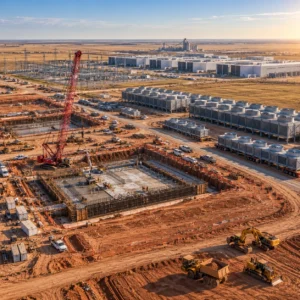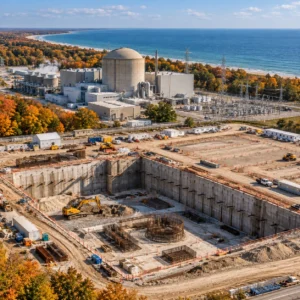
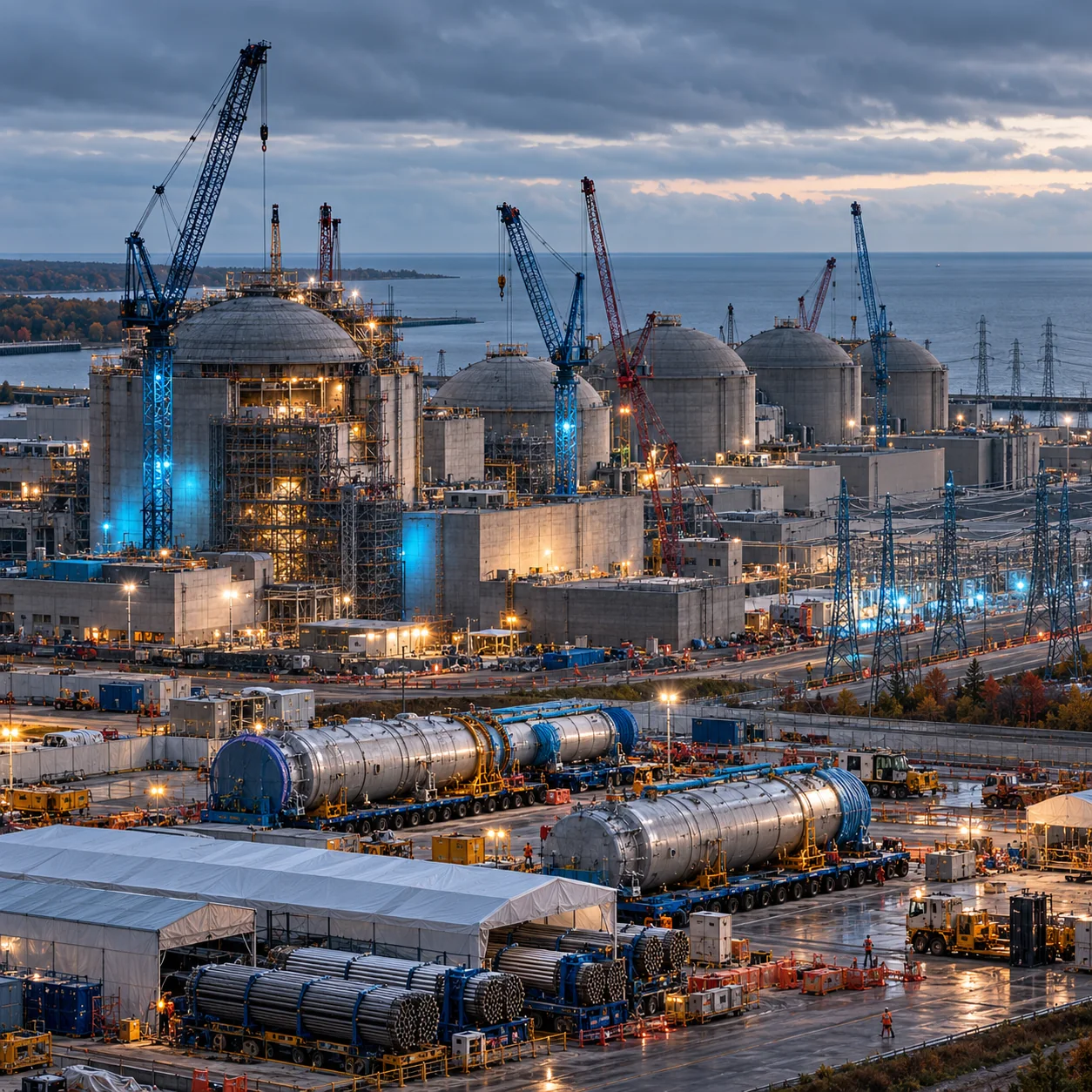
Ontario has put more than C$3 billion behind keeping an existing nuclear plant running.
On September 21, Candu Energy, an AtkinsRéalis company, and Aecon Group signed a three-year, C$1.7 billion contract with Ontario Power Generation. It covers the start of the retube, feeder and boiler replacement at Unit 5 of the Pickering Nuclear Generating Station. Two days later the province announced the wider package, according to World Nuclear News: more than C$3 billion in contracts, including a C$1.3 billion turbine generator replacement awarded to Aecon and Siemens Energy Canada.
The work is designed to keep Unit 5 running into the 2060s. The industry spends a lot of attention on new reactor designs, and this deal is a reminder that the fastest clean, firm megawatts are often the ones already connected to the grid.
What the Pickering Contract Actually Buys
Pickering’s four B units, 5 through 8, are due to come out of service by the end of September 2026. Refurbishment is scheduled to begin in January 2027, subject to regulatory approval. World Nuclear News reports that the work includes replacing 1,520 fuel channels and 48 boilers, building a 1.5 kilometre deep-water intake, installing 14 new steam turbine rotors and overhauling four generators with stator rewinds.
After refurbishment the station is expected to deliver up to 2,200 MW, which the American Nuclear Society says is enough for about 2.2 million homes. Pickering currently supplies around 14% of Ontario’s electricity.
The Candu Energy and Aecon contract covers engineering and design, project delivery, and program and project management for Unit 5. AtkinsRéalis expects similar work on Units 6, 7 and 8 in later phases, also pending regulatory approval.
That sequencing matters.
Finishing one unit first and carrying the lessons into the next is the same approach Ontario used at Darlington. World Nuclear News reported in January 2025 that the same joint venture had completed three Darlington units ahead of schedule.
Refurbishment Is Becoming a Repeatable Business
Ontario has now run this playbook long enough that it looks less like a one-off megaproject and more like a production line. The Candu Energy and Aecon partnership is moving from Darlington to Pickering with the same reactor technology, the same core delivery model and a supply chain that has been doing this work for years.
AtkinsRéalis says the CANDU supply chain is 85% Canadian, covers more than 250 companies and sustains 90,000 jobs. According to World Nuclear News, the province expects the Pickering project to protect 4,500 jobs, create 30,500 new ones and add C$41.6 billion to GDP.
For contractors, the commercial appeal is clear. Refurbishment gives them years of backlog tied to a known asset, a known owner and a regulator that already knows the plant. AtkinsRéalis says its share of the contract will be added to its nuclear backlog in the third quarter of 2026.
Few new build projects can offer that kind of visibility.
Why Demand Forecasts Make Old Reactors Valuable
AtkinsRéalis notes that Ontario’s electricity demand is forecast to grow 75% by 2050. With that outlook, losing up to 2,200 MW of baseload at Pickering would leave a gap that almost nothing carbon-free could fill on the same timeline.
The same maths applies in the United States. Utilities facing data center and industrial load growth are pursuing subsequent license renewals and uprates for the same reason. An existing site already has a grid connection, cooling water, a trained workforce and a community that accepts it. A greenfield project can spend years trying to secure those things.
Ontario energy minister Stephen Lecce said extending the facility’s life “will create jobs for tens of thousands of skilled workers,” ANS reported. OPG chief executive Nicolle Butcher said the work will “ensure this important station continues to play a vital role in powering Ontario for future generations.”
The Fuel Security Case for CANDU Gets Stronger
CANDU reactors run on natural, unenriched uranium. AtkinsRéalis nuclear president Joe St. Julian described that as a way of reducing foreign enrichment reliance. The point carries weight while enrichment remains one of the most closely watched constraints in the fuel supply chain.
There is a medical benefit as well. World Nuclear News says Canadian CANDU units produce 50% of the world’s cobalt-60, and ANS reports that the Pickering refurbishment is expected to secure a long-term supply of cobalt-60 for medical use.
AtkinsRéalis also wants to bring the technology to the United States. In June the company filed a Notice of Intent with the NRC. That formally opened pre-application engagement toward design certification for the Enhanced CANDU 6, a 700 MW-class design. A steady record of refurbishment delivery at home is the strongest credential it can offer American utilities, data center operators and industrial buyers.
What Fleet Owners Can Borrow From Ontario
Anyone planning life extension on a large fleet can learn from how the Pickering program is set up:
- Phase the work unit by unit so lessons carry forward
- Keep the same contractor teams across projects to hold on to specialist skills
- Secure long-lead components and domestic suppliers early
- Build dedicated training facilities before outages begin
- Combine reactor work with turbine and generator upgrades in the same outage
- Get political and regulatory support in place before committing capital
ANS reports that Ontario built a 200,000 square foot facility for retube, feeder and boiler replacement work, an investment made long before the first fuel channel comes out.
None of this is glamorous. It is, however, the part of the nuclear sector that is reliably turning capital into firm capacity today.
The Real Test Starts in January
Execution now becomes the story. The Pickering B units come offline this month, and every day of outage is a day without output, so schedule discipline will decide how the project is judged. The Darlington record gives Ontario reason for confidence, but every station brings its own engineering conditions.
If Unit 5 returns on time, Units 6 to 8 become much easier to approve, and the model becomes easier to export.
New reactors get the headlines. Refurbished ones keep the lights on until those new reactors arrive.