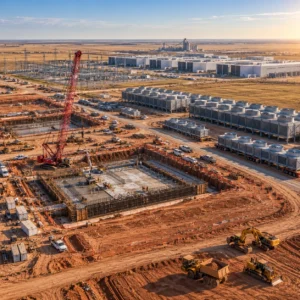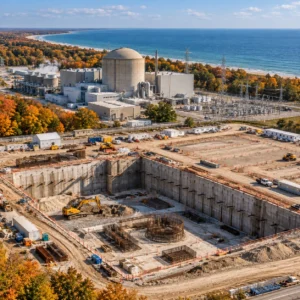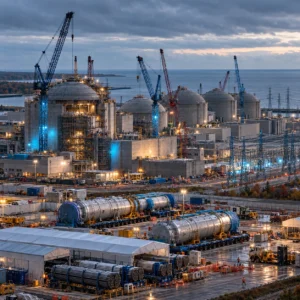
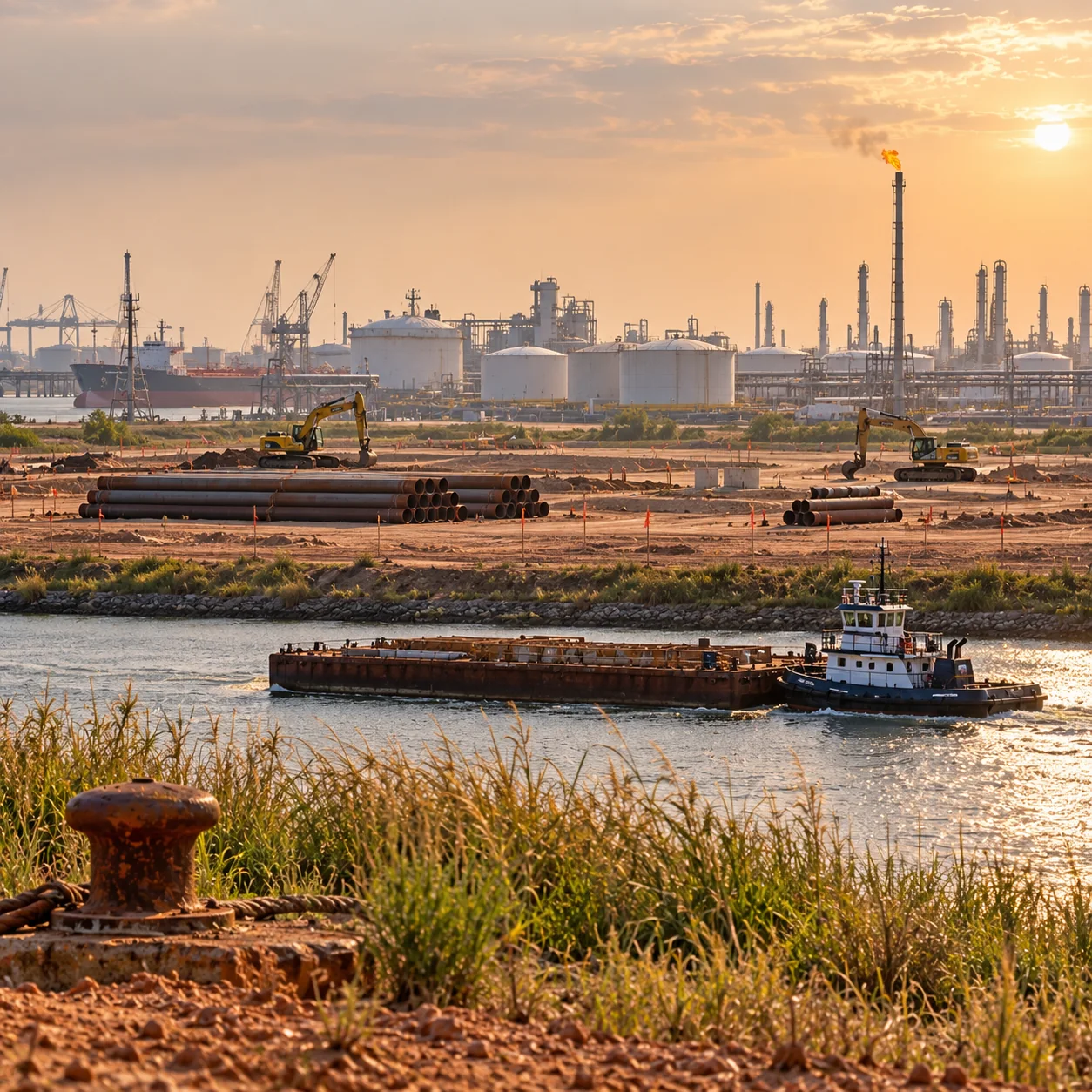
Blue Energy has put its gas-to-nuclear model in front of federal regulators.
On September 16, the startup filed the first part of its construction permit application with the U.S. Nuclear Regulatory Commission for a plant at the Port of Victoria, Texas. According to the company, the filing makes it one of only five nuclear companies to submit a construction permit application in the current wave of new nuclear development.
The application covers the first nuclear unit, a GE Vernova Hitachi BWRX-300 small modular reactor. It also asks the NRC to approve an approach the industry has not tried before: build the natural gas plant and shared balance-of-plant first, then add reactors that use the same infrastructure.
For developers chasing data center load, that sequence is the story.
Gas First, Nuclear Next Is Now a Licensing Question
The Victoria plant will pair GE Vernova 7HA.02 gas turbines with BWRX-300 units. According to World Nuclear News, two gas turbines will provide about 1 GW at the start, with up to five BWRX-300 reactors totalling 1.5 GW to follow. Crusoe, the AI infrastructure company that signed for the site in November 2025, is due to begin receiving power in 2028 and move to nuclear generation by 2031.
Blue Energy calls its method “Blue Bridge”. The application asks the NRC to approve building the gas portion and balance-of-plant ahead of the reactors, and requests permission for limited construction activities, including deep foundation and shaft works to house the first SMR.
That turns a commercial idea into a regulatory one.
If the NRC accepts the sequencing, the customer gets power years before the reactor is finished, and the shared plant is already built and running when the nuclear units arrive. The project earns revenue early instead of waiting a decade for its first megawatt.
Months, Not Years, From Technology Choice to Filing
The pace of the work stands out. GE Vernova Hitachi says Blue Energy selected the BWRX-300 earlier in 2026 and has partnered with it on engineering and licensing. World Nuclear News dates the collaboration to May 2026, with a next-stage agreement in August.
“Our team has moved from technology selection to the NRC construction permitting process in a matter of months,” said Jake Jurewicz, Blue Energy’s chief executive and co-founder.
The groundwork started earlier. The NRC approved Blue Energy’s licensing topical report in December 2025, and the new filing includes an environmental report of nearly 300 pages. The company says the report found no significant impacts on endangered species, tribal lands or historical sites.
The application is phased. Blue Energy expects to file the second half in the second half of 2027, after completing the one calendar year of site-specific data collection the NRC requires.
A Common Reactor Turns Projects Into a Fleet
Blue Energy is not betting on a new reactor design. It is betting on a new way to build plants around an existing one.
The BWRX-300 already has momentum. Ontario Power Generation is building the first unit at Darlington in Canada, and the Tennessee Valley Authority has filed a construction permit application for one at Clinch River, Tennessee. Victoria would add a third project on the same technology.
“This is what fleet deployment looks like: projects advancing on common technology, allowing us to apply lessons from one project to the next,” said Jason Cooper, chief executive of GE Vernova Hitachi Nuclear Energy.
The company’s case rests on a cost argument. According to World Nuclear News, Blue Energy says reactors make up less than 10% of a nuclear plant’s cost. If that holds, most of the savings sit in how the rest of the plant is designed, built and financed, which is exactly where the gas-first model aims.
Private Capital Is Carrying the Risk
The financing structure matters as much as the reactor. Blue Energy has raised more than $400 million, including a strategic investment from Constellation Technology Ventures, and has retained Societe Generale to structure project financing. The company stresses that the project is not funded by ratepayers. A final investment decision is expected in 2027.
That puts the risk with investors and the end customer instead of utility bills. It also raises the questions every new build has to answer.
Can early gas revenue carry a first-of-a-kind nuclear build through construction?
Will lenders price the nuclear phase differently once the plant is already running?
For developers, utilities and investors following the project, the key markers are clear:
- Whether the NRC accepts the Blue Bridge sequencing
- The scope of approval for early foundation and shaft works
- Completion of site data collection and the second filing in 2027
- Final investment decision and project finance terms in 2027
- First gas power to Crusoe in 2028
- How lessons move between Darlington, Clinch River and Victoria
The Hybrid Plant Could Become a Template
Large AI campuses want power on a timeline nuclear has rarely met. Gas can connect them quickly. Nuclear can supply firm, low-carbon power for decades. Blue Energy is trying to put both into one licensed plant instead of treating them as rivals.
If the NRC review goes well, other developers will have a model for using gas to get customers connected while nuclear catches up, without building two separate plants. Utilities weighing new load could adopt the same sequencing, and reactor vendors gain another route to orders.
The concept still has to be proven in steel and concrete. With a filing accepted for review, a reactor already under construction elsewhere and private capital committed, it has moved well past the slide deck.
Gas gets the data center switched on. The construction permit decides whether nuclear finishes the job.